

ABA Setting Guide · Carmel, Indiana
In-Home vs. Center-Based ABA Therapy in Carmel: Which Fits Your Family?
Neither setting is automatically better. The right choice depends on the skills your child is learning, where those skills need to happen, the amount of peer interaction that would help, and what your family can realistically manage each week.
01 · Start with the goal
The Best Setting Is the One That Matches the Skill
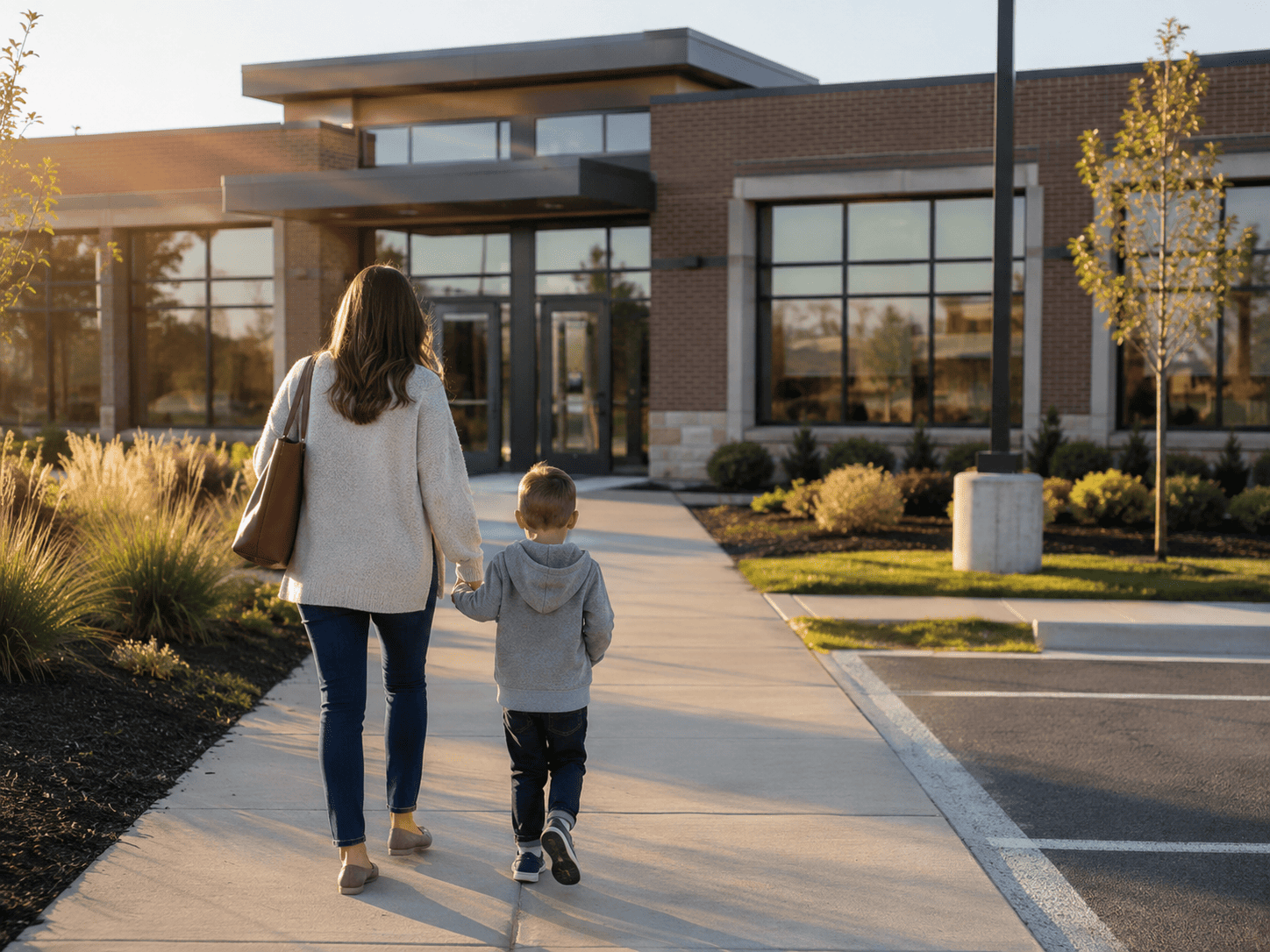
A useful decision starts with the treatment goal, not with a provider’s preferred delivery model. Some skills need to be practiced in the room where they occur. Others benefit from peers, transitions, shared materials, and a setting that feels more like preschool or a community environment.
In-home ABA
Best suited to routines in the natural environment
- Mealtime and food-related routines
- Dressing, hygiene, and bedtime
- Morning transitions before school
- Sibling and caregiver interactions
- Skills that are difficult to transfer home
Main advantage: the skill is taught where your child must actually use it.
Center-based ABA
Best suited to social learning and structured practice
- Turn-taking and shared play
- Following group routines
- Moving between activities and rooms
- Preparing for preschool or kindergarten
- Access to peers and an on-site clinical team
Main advantage: more natural opportunities for peer interaction and structured learning.
02 · In-home ABA therapy
Home Sessions Put the Teaching Inside Real Family Routines
In-home ABA happens in the environment where many daily skills are expected. A behavior technician working on getting dressed, sitting through a meal, asking for a break, or moving through a morning routine can teach the skill in the same bedroom, kitchen, or hallway where the challenge occurs.
That context can make it easier to see what is actually happening before and after a behavior. It also allows the BCBA to build strategies around the family’s real space, available materials, caregivers, siblings, and schedule rather than recreating the routine in a clinic.
03 · Center-based ABA therapy
A Center Creates More Opportunities for Peers, Transitions, and Structure
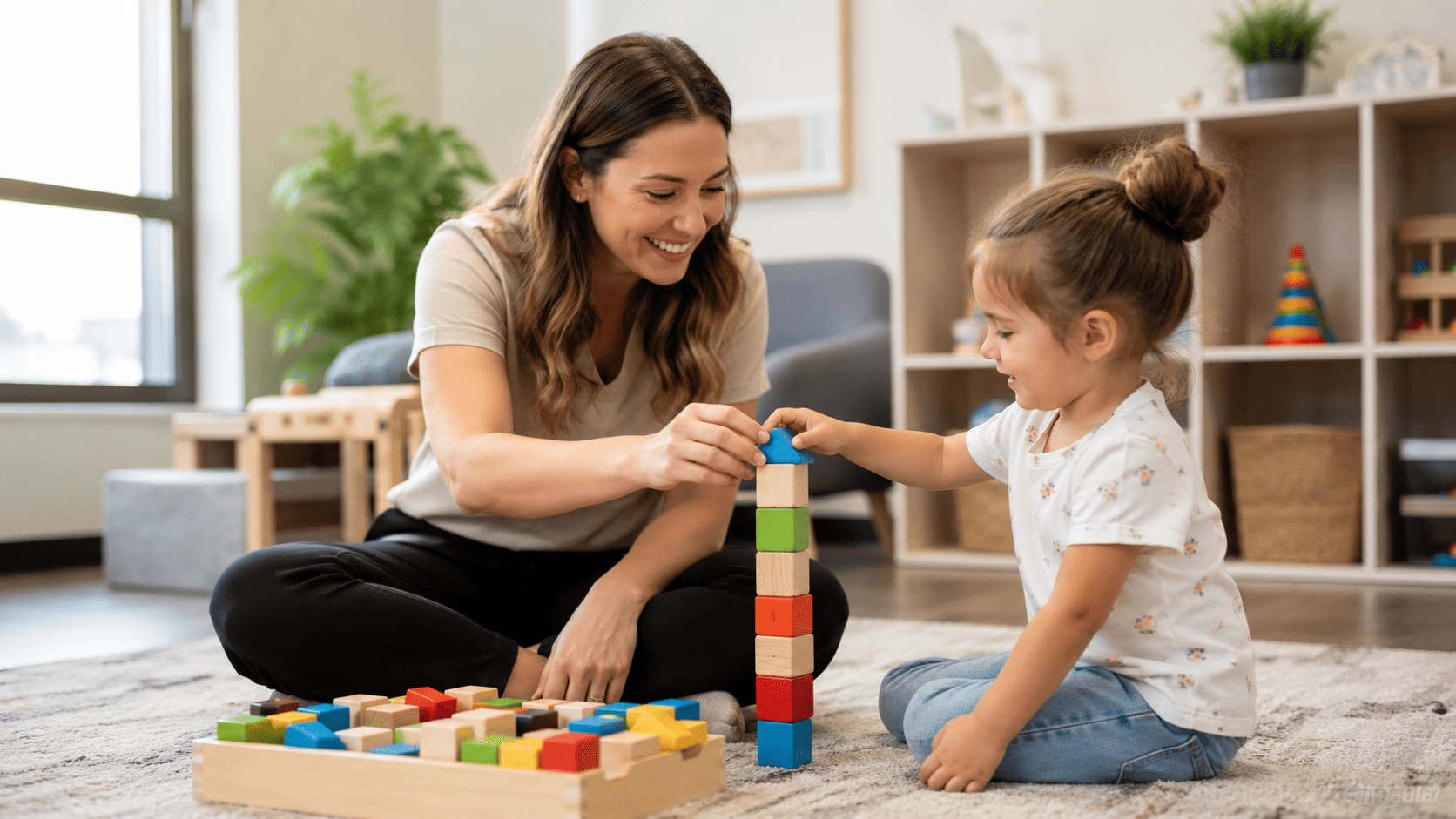
Center-based therapy gives the team more control over the learning environment and makes it easier to arrange repeated opportunities for social interaction, waiting, sharing space, following group directions, and moving between activities.
At the Carmel Tech Center off Hancock Street, children working on social and school-readiness goals may have access to other learners, multiple activity areas, and an on-site team. Those features can be hard to reproduce during one-on-one sessions in a family home.
04 · Match the setting to the need
Use These Questions to Narrow the Choice
These are not diagnostic rules. They are practical prompts to discuss during the assessment and treatment-planning process.
Is the goal tied to one routine or room?
Bedtime, toileting, meals, dressing, and leaving the house are often easier to understand and practice in the natural setting.
Does your child need more peer interaction?
A center can create more frequent chances to wait, share, join play, follow group expectations, and tolerate other children nearby.
Where can your child participate consistently?
The best theoretical setting will not help if the schedule, travel, sensory demands, or household conditions make consistent attendance difficult.
Where is the skill breaking down?
If a child knows a skill in one place but not another, the plan may need more practice across settings rather than a permanent switch.
05 · The Hamilton County reality
Your Commute Is Part of the Treatment Plan
A center schedule may look manageable on paper until it is repeated several days a week around work, school pickup, siblings, and Hamilton County traffic. Families near the Arts & Design District, Midtown, or the Monon Greenway may have a relatively short trip to Hancock Street. A family traveling from Westfield, Noblesville, Fishers, or Zionsville has different logistics to consider.
Travel should not be the only factor, but it is a real one. Ask how many days require an on-site trip, whether arrival and pickup times are flexible, and whether any goals can be addressed at home without reducing the quality or consistency of care.

06 · A combined approach
You May Not Have to Choose Only One Setting
Some children benefit from a combination. Center-based sessions can address peer interaction, transitions, and structured learning while selected home sessions focus on routines that cannot be reproduced accurately elsewhere.
A mixed schedule should still be purposeful. Each setting needs a clear reason, and the BCBA should explain how data from both environments will be reviewed together. A hybrid plan should not simply add travel or hours without identifying what each location contributes.
“What goal requires the center, what goal requires the home, and how will progress transfer between them?”
07 · Before accepting a schedule
Questions Worth Asking the Provider
Which of my child’s goals specifically benefit from this setting?
How often will the BCBA observe sessions in each location?
How will skills learned at the center be practiced at home?
What peer opportunities are actually available during center sessions?
What space, caregiver participation, or materials are needed for home visits?
Can the setting or schedule change when the data shows a different need?
Common questions
In-Home and Center-Based ABA in Carmel
A BCBA should make the final recommendation after assessing your child, family priorities, and treatment goals.
Is in-home ABA more effective than center-based ABA?
Not universally. Effectiveness depends on the child’s goals, treatment quality, supervision, consistency, and whether the setting provides the opportunities needed to practice the target skills.
Which setting is better for social skills?
A center often provides more natural access to peers and group routines. Home sessions can still address social communication with caregivers and siblings, but peer opportunities may be more limited.
Which setting is better for mealtime, dressing, or bedtime?
In-home therapy may be especially useful when the goal is tied to a specific family routine because the team can observe and teach the skill where it normally occurs.
Can my child receive both in-home and center-based ABA?
Possibly. A combined plan may be appropriate when different goals require different environments. Availability can depend on the clinical recommendation, insurance authorization, staffing, and service area.
Can we change settings later?
Ask the provider how setting changes are handled. Treatment should be reviewed as goals, participation, family needs, and progress change rather than treating the initial location as permanent.