Early Intervention for Autism Spectrum Disorder in Carmel
Early Intervention for Autism in Carmel, IN
It makes all the difference...
The first years of life shape lifelong learning, behavior, and connection.
Did you know?
- 700 neural connections form every second in early childhood.
- Early intervention rewires brain circuits before some challenges take hold.
- Waiting to schedule an autism evaluation until later years means missing the period of highest brain adaptability (neuroplasticity).
- Research shows every $1 in early intervention returns up to $9 in long-term benefit.

Our Approach
At MindWay, we combine the precision of neuroscience with the heart of compassionate ABA Therapy. Through qEEG brain mapping, we identify how your child’s brain processes information, revealing patterns that guide highly individualized early intervention plans. This allows us to strengthen the neural circuits responsible for attention, communication, and emotional regulation during the most critical window of brain development.
Our Sessions
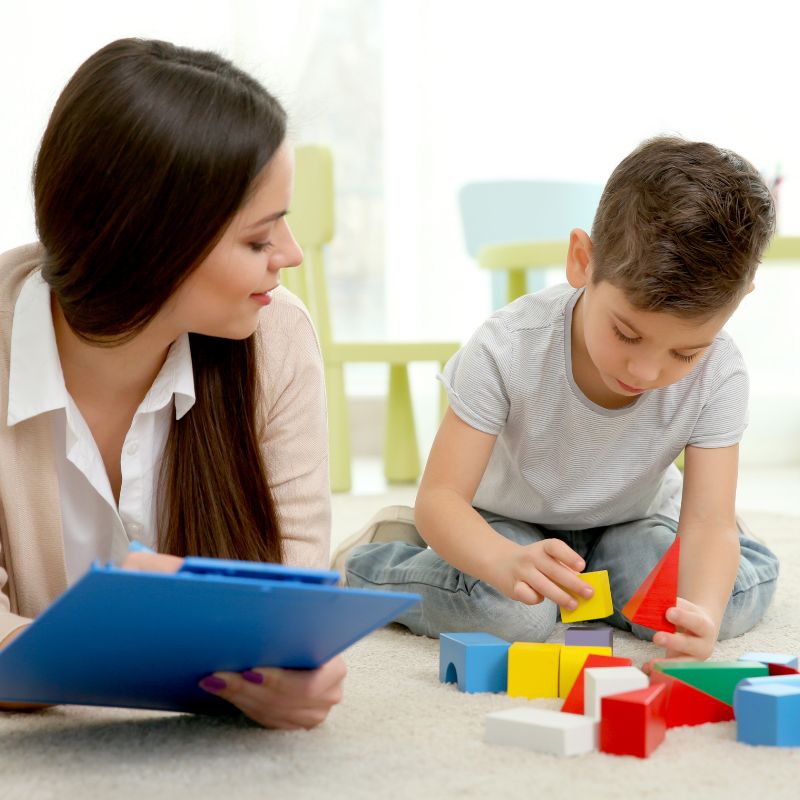
Every session is designed to feel natural and joyful for your child. Our team of board-certified behavior analysts uses gentle, play-based ABA therapy in Carmel, IN to build confidence, connection, and resilience. The result is a treatment experience that’s grounded in science, rich in empathy, and uniquely designed to help every child grow, learn, and thrive.
Our Science-Backed, Compassion-Driven Approach

Brain Mapping & Early Assessment
qEEG and behavioral analysis identify brain activity patterns even before behaviors appear.

Individualized ABA Therapy
Gentle, play-based interventions targeting communication, attention, and social engagement.
Collaborative Care
Integrating psychology, neuroscience, and behavioral science for whole-child outcomes.



Early Signs That May Indicate Your Child Needs Autism Support
Limited speech or not responding to name by age 2
Difficulty with eye contact or social play
Strong reactions to sensory input (sounds, lights, touch)
Repetitive behaviors or routines
Emotional meltdowns or difficulty self-regulating
*No obligation, just understanding

Early Intervention Helps
The good news is that identifying these signs early opens a powerful window for growth. Through early intervention, children can strengthen communication, social, and emotional skills while their brains are still rapidly developing. At MindWay, we help parents move from worry to understanding, using gentle, evidence-based assessments and compassionate guidance to ensure every child receives the support they need to learn, connect, and flourish.
Common Questions from Caring Parents
Frequently Asked Questions
What are the signs of autism in young children?
Every child develops at their own pace, but when certain milestones are delayed, it may be time to take a closer look. Early signs of autism often appear before age three and can include limited speech or lack of response to their name, avoiding eye contact, or showing little interest in social play.
Some children may prefer routines and repeat certain movements, while others might become easily overwhelmed by sounds, lights, or touch. These differences don’t mean your child can’t thrive; they’re simply signals that their brain processes the world in a unique way.
When to Start Early intervention for austism?
Early intervention for autism could start as early as 12 months and ideally should start before the child is three-years-old.
A child’s brain grows and changes rapidly in the first few years of life, and this period of neuroplasticity creates an ideal window for learning new skills. That’s why early intervention often begins as early as one years old, and why children typically benefit most when ABA services start before age three.
The American Academy of Pediatrics recommends routine autism screening at 18 and 24 months. But if you have concerns about your child’s communication, behavior, or development at any age, you don’t need to wait for a referral. Families can request an evaluation at any time…recommended at 18 and 24 months.1
What is the best early intervention for autism?
The best early intervention for autism is accomplished through Applied Behavioral Analysis (ABA) therapy. Treatment plans are different for each child and should be personalized, intensive, and family-centered.
For children under three-years-old, play-based ABA therapy, speech, occupational, and physical therapy can enhance communication, social skills, and emotional regulation. Starting as early possible will significantly increase the long-term benefits.
Can a mild autistic child become "normal?"
Autism, no matter how mild or severe, can not be cured. However, many nearuodivergent individuals can learn important life skills through ABA therapy that will prepare them for success and independence.
With early intervention and the proper support, some individuals with autism may reach a point where they no longer meet the diagnostic criteria for autism support.

Source:
- American Academy of Pediatrics, Publications.aaap.org, Identification, Evaluation, and Management of Children With Autism Spectrum Disorder, https://publications.aap.org/pediatrics/article/145/1/e20193447/36917/Identification-Evaluation-and-Management-of