Transforming Lives Through Brain Mapping & ABA Therapy Integration in Carmel, Indiana
What is Brain Mapping?
Brain mapping, also known as quantitative electroencephalography (qEEG), is a noninvasive way to measure and visualize electrical activity in the brain, helping clinicians understand how different regions communicate and function together1
When combined with Applied Behavior Analysis (ABA), it provides a data-driven foundation for more personalized autism therapy.
Brain mapping, also known as helps us see where brain circuits are underactive or overactive, guiding personalized treatment plans and neurofeedback protocols.

Mapping the Mind. Guiding the Way.
Brain mapping helps us connect what we see in behavior with what’s happening in the brain, leading to more effective, individualized ABA therapy.

A MindWay ABA Story of Neuroplasticity, Science and Hope.
An 8-year-old boy came to us after years of frustration. He was restless, easily distracted, and overwhelmed by schoolwork. Teachers called it ADHD. Doctors prescribed medication. Nothing truly helped. His spark was dimming.
When we conducted a brain map, we saw the real story: his brain wasn’t broken, it was overprotective.

MindWay ABA Story of Growth & Resilience
When an 11-year-old girl with autism came to us, her world had shrunk to four walls. She refused to go to school, avoided leaving the house, and demanded her routines stay exactly the same. Even small changes, like a different cup or sound outside, sent her spiraling…
CLARITY. CONNECTION. CHANGE.
Because Your Child Deserves More than Guesswork
We believe that true progress comes from treating the whole child, starting with the brain, the organ responsible for all thinking and personality development. Dr. Yip integrates gold standard autism treatment with the hard data provided by her advanced brain mapping technology (qEEG). This combined approach ensures that treatment plans are based on the objective measurement of specific brain circuitry disturbances in addition to behavioral milestones and skill acquisition.
CLARITY
We look beyond behavior and into the brain
Brain mapping turns uncertainty into understanding. By measuring how your child’s brain communicates, we can pinpoint what’s driving behaviors, not just what they look like.
Understand the “Why” Behind Behavior
See how brain activity patterns relate to focus, anxiety, or emotional response — giving you answers that behavioral observation alone can’t provide.
Identify Hidden Barriers to Learning
Discover whether your child’s challenges stem from attention issues, anxiety, or sensory processing differences. This clarity guides more effective strategies.
Catch Early Signs Before They Become Challenges
Brain mapping can detect subtle differences in neural communication even before behaviors appear — allowing for earlier, more successful intervention.
*No obligation, just understanding

CONNECTION
We eliminate guesswork and align therapy with the brain
Create More Targeted ABA Therapy Plans
Each brain map shows which networks are overactive or underactive — helping us personalize interventions that your child can engage with successfully.
Improve Communication and Social Skills
By identifying brain regions like the parietal lobe and default mode network, we can better support social awareness, adaptability, and self-expression.
Support Emotional Regulation
Brain mapping reveals overactivity in emotional centers linked to anxiety or sensory overload, allowing us to design strategies that promote calm and self-control.
Integrate Care Across Disciplines
Your child’s brain map serves as a shared roadmap for therapists, physicians, and educators — ensuring everyone works together toward the same goals.
CHANGE
Track, Adapt, and Thrive
With every map, we can measure progress not just in behavior, but in brain function, helping families see visible, data-backed transformation.
Measure Real Progress You Can See
Follow-up brain maps show how your child’s brain is changing over time — giving you tangible proof that therapy is making a difference.
Track How the Brain Responds to Intervention
Whether through ABA, neurofeedback, or medication, brain mapping allows us to monitor how your child’s brain adapts — ensuring the right approach at every step.
Empower Parents With Clarity and Hope
Parents often tell us that brain mapping gave them something they’d never had before, answers. It replaces guesswork with understanding, and worry with confidence.
*No obligation, just understanding

What Can We Learn From Brain Mapping?
Understanding your brain is the first step toward healing, focus, and growth.
See how the brain communicates differently.
Using qEEG, we identify connectivity patterns in the brain regions related to communication, social interaction, and sensory integration.
This assessment helps families and clinicians understand how a child’s brain processes information, a powerful first step toward meaningful, individualized therapy.
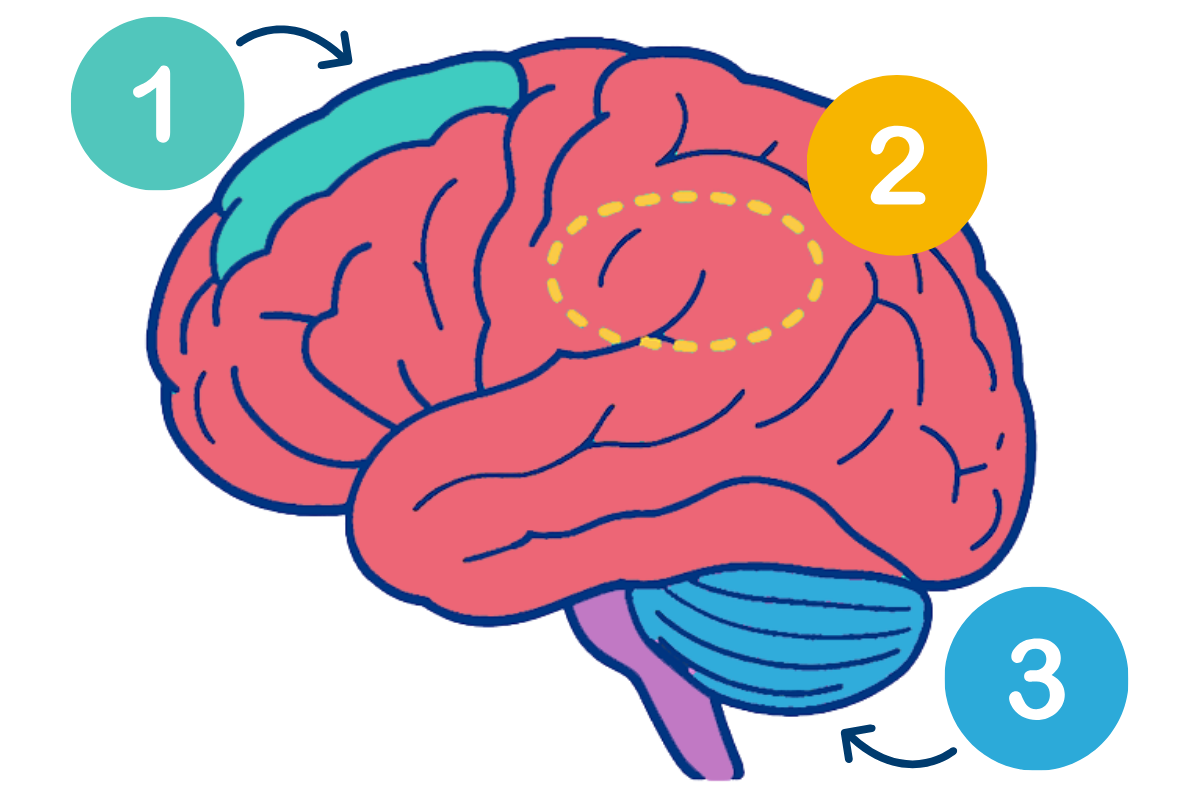
1
Social Understanding & Adaptability
(Parietal Lobe)
The parietal lobe helps the brain process social information and adapt to changes in the environment. In autism, this area may be underconnected, making social understanding and flexible thinking more challenging. Recognizing its role helps guide behavioral strategies that build social adaptability.
2
Perception of Self & Others
(Default Mode Network)
The default mode network supports self-awareness and understanding others’ perspectives. When this network functions differently, it can affect how a person perceives social boundaries and relationships. Mapping DMN activity helps ABA providers and families understand how a child interprets social cues.
3
Anxiety & Overstimulation
(Emotional Regulation Centers)
The default mode network supports self-awareness and understanding others’ perspectives. When this network functions differently, it can affect how a person perceives social boundaries and relationships. Mapping DMN activity helps ABA providers and families understand how a child interprets social cues.
Functional Brain Assessments
Measure what’s happening beneath behavior.
Our functional brain assessments integrate qEEG data with behavioral analysis to reveal the root causes of focus, mood, or learning challenges.
Rather than guessing, we use measurable data to understand how the brain is functioning — allowing more precise and effective intervention.
Medication Management
Dr. Jane brings advanced pharmacology training to every case, using medications conservatively and only when needed, always grounded in your child’s unique neurological and developmental needs.
Early Intervention
We work with toddlers and preschoolers to strengthen communication, behavior, and learning through evidence-based early intervention—giving families tools and hope right from the start.
Behavioral Issues
We help children facing behavioral challenges by identifying the “why” behind the behavior and building practical strategies that create more calm, connection, and consistency at home and school.
Emotional Disregulation
We help identify which neural circuits are overactive or underactive, providing a clear picture of how the brain processes emotions, attention, and stress. With this insight, individualized self-management strategies can be created to strengthen regulation, improve focus, and reduce behaviors driven by anxiety or emotional overload.
Intellectual Disability
We provide compassionate, skill-building support for children with intellectual disabilities—focusing on practical progress, personalized goals, and the confidence every child deserves to build.
Developmental Issues
We support children with developmental delays by identifying early needs and building custom plans that foster growth in communication, motor skills, and social-emotional development.
Common Questions from Caring Parents
Frequently Asked Questions
What is brain mapping?
Brain mapping uses safe, non-invasive technology to understand how your child’s brain processes information. This helps us create the most effective ABA therapy plan for their unique learning style.
Why do most BCBA's not use brain mapping?
Most psychiatrists and mental health providers don’t include brain mapping (qEEG) in their ABA therapy plans, because it requires a different level of specialization.
A qEEG involves advanced technology, precise data analysis, and deep knowledge of brain circuitry, skills that typically fall outside traditional psychiatric training.
At Bright Brain Mapping, this is our expertise.
We focus exclusively on understanding how the brain’s networks communicate, where imbalances occur, and how those patterns relate to focus, mood, and behavior. By integrating neuroscience with behavioral insight, we help clients and their care teams see the why behind symptoms—something that can’t always be detected through observation alone.
What happens in a brain mapping session?
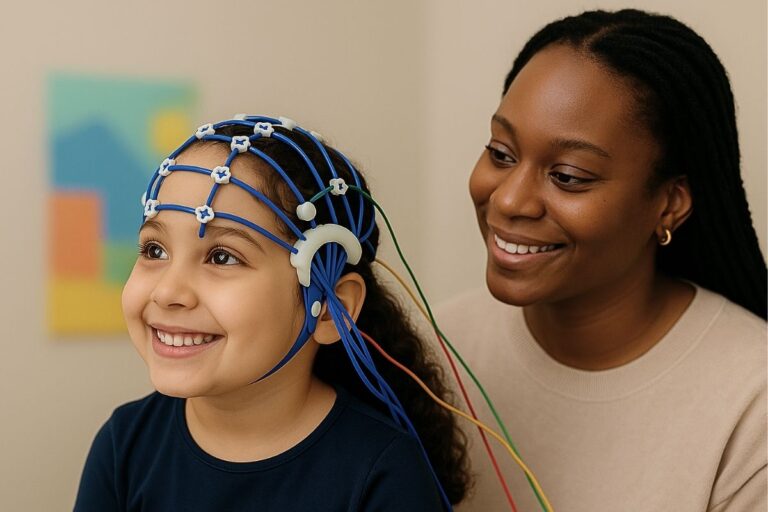
A brain mapping session is simple, gentle, and completely noninvasive, most children describe it as “wearing a funny hat with wires.” The entire process typically takes about 30 to 45 minutes and is conducted in a calm, comfortable environment designed to help your child feel at ease.
Once the cap is in place, your child will sit quietly — sometimes watching a video or resting with eyes closed — while the sensors record brainwave patterns from different parts of the brain. The process is painless, safe, and often surprisingly quick.
How are brain maps created?
The recorded brainwave data is analyzed using qEEG software, which compares your child’s brain activity to a large database of typical brain function for their age. The results are shown as a color-coded brain map, highlighting areas that may be overactive, underactive, or out of sync.
Our clinician reviews the map and explains the findings in plain language. You’ll learn how specific brain patterns may be influencing your child’s emotions, attention, learning, or behavior. This insight helps guide a customized treatment plan that integrates ABA therapy with brain-based interventions to support better outcomes.
How is brain mapping used to track aBA Progress?
Brain mapping isn’t just a one-time test, it can be repeated over time to track changes and measure the effectiveness of therapy. This helps us celebrate progress, fine-tune interventions, and make sure each child continues to grow in the right direction.
Source:
- WorldBrainMapping.org, Society for Brain Mapping and Therapeutics, What is Brain Mapping?, https://www.worldbrainmapping.org/about/what-is-brain-mapping/